Driving through the Dallas-Fort Worth area often feels like a real test of patience. Dallas is now ranked the 17th most congested city in the U.S. Midday traffic has surged, with more trips being made during the day than ever before, making our streets even more crowded and risky.
 These congestion numbers aren’t just frustrating—they correlate with a higher likelihood of crashes. Car accidents in Dallas happen every day, often leading to serious injuries or worse. At Freese & Goss, we believe the first step to protecting yourself is understanding the dangers on your roads. That’s why we’ve compiled the latest Dallas car accident statistics, including the times, causes, and age groups most affected, so you can drive smarter and stay alert.
If you or a loved one has already been injured in a Dallas crash, our team is ready to guide you through your options. Call us today at (214) 761-6623 or fill out our online form to discuss your situation.
A Look at Recent Dallas Car Accident Statistics
Dallas roads remain some of the most dangerous in the country. For years, the city has ranked among the deadliest metropolitan areas in the United States for drivers, pedestrians, and cyclists alike.
However, recent Dallas car crash statistics from 2025 suggest that safety efforts may finally be making a difference:
- Total Fatalities: In 2025, Dallas saw 107 accidents resulting in deaths. This is a massive drop from the 208 fatalities recorded in 2024.
- Serious Injuries: There were 595 reported serious injuries in 2025, compared to 935 the year before.
- Total Crashes: Even with fewer deaths, Dallas still sees more than 26,000 reportable crashes annually.
This decline is largely credited to the “Vision Zero” initiative, which focuses on fixing “high-injury” roads. In fact, just 7% of Dallas streets are responsible for more than half of the city’s severe crashes.
When and Where Do Crashes Happen Most Often in Dallas?
Dallas car crash statistics show that your risk changes depending on the clock and the calendar.
If you are commuting home from work, you may be traveling during one of the city’s peak accident windows.
- Early Evening to Midnight: According to crash data from the City of Dallas, more fatal and severe crashes occur between 6:00 p.m. and midnight than at any other part of the day. The highest concentration of serious and deadly crashes is seen between 6:00 p.m. and 9:00 p.m. This period consistently shows the greatest density of severe injuries and fatalities, highlighting the dangers of evening driving in urban traffic.
- Late Night Weekends: The deadliest time for fatal accidents is midnight to 3:00 a.m. on Saturday and Sunday mornings, when impaired driving and risk-taking behavior are most common.
Statewide and local data show that October is frequently the deadliest month for Texas drivers. Additionally, major holiday weekends, like the Fourth of July and New Year’s Eve, see a spike in incidents due to increased travel and alcohol consumption.
Dallas car accident statistics can explain how a crash happened, but they can’t capture the pain, the mounting medical bills, or the uncertainty that follows a serious accident.
At Freese & Goss, we represent people whose lives were suddenly disrupted by someone else’s negligence. Our attorneys bring more than 77 years of combined experience to complex injury cases, and we have recovered over $1 billion for clients nationwide. We prepare every case with the expectation that it could go to trial, which allows us to push back when insurance companies try to minimize what you’ve been through.
If you were injured in a Dallas car accident and have questions about your options, we’re ready to listen.
Call Freese & Goss at (214) 761-6623 or fill out our private online form today for a free, confidential consultation.
Why Do These Crashes Happen?
Below are the leading reasons for Dallas motor vehicle crash statistics remaining as high as they are:
Speeding
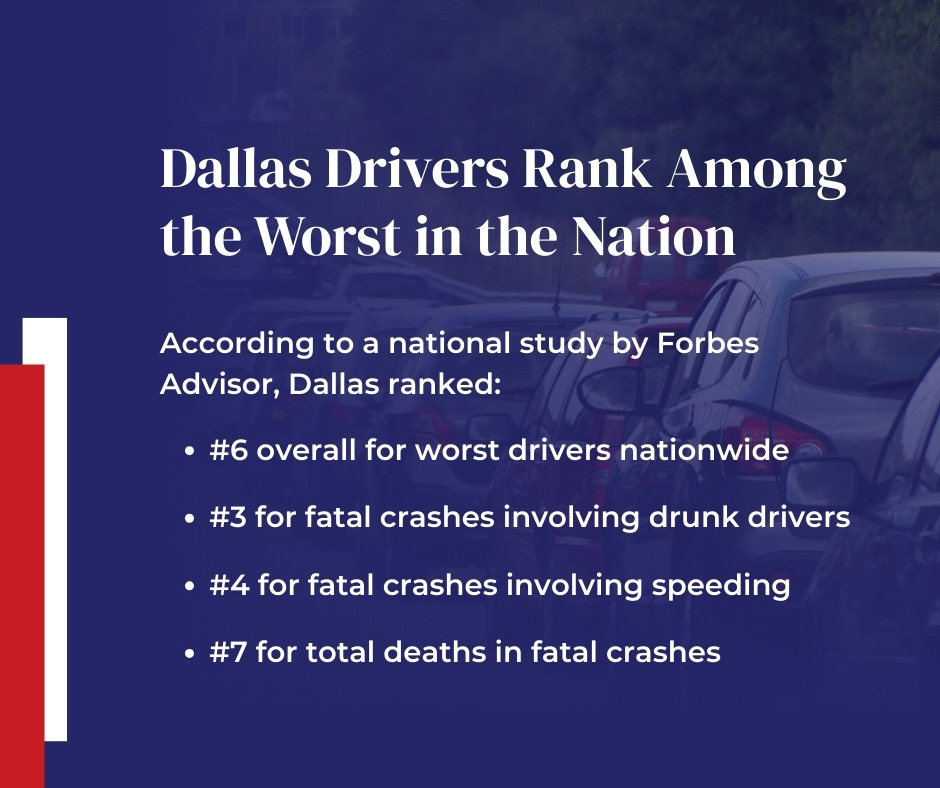
Speed is the number one killer on Dallas roads. It has been the top factor in deadly crashes for nine out of the last ten years. In 2025, speeding was the cause of nearly 41% of all fatal accidents in the city. Faster speeds mean you have less time to react, and the impact is much more violent.
Impaired Driving
Driving under the influence of alcohol or drugs remains a massive problem. In 2025, impairment was the second leading cause of fatal wrecks, responsible for about 21% of road deaths in Dallas.
Distracted Driving
Whether it is checking a text or adjusting the GPS, distractions lead to disaster. In Texas, nearly one in five crashes involves a distracted driver. A single glance at a phone at 60 mph is like driving the length of a football field blindfolded.
Failure to Yield
This is especially common at busy Dallas intersections like I-635 and Skillman Street. When drivers run red lights or turn without looking, it often leads to “T-bone” collisions, which cause high rates of serious injury.
Also, over the past ten years, Texas Department of Transportation crash records show that drivers failing to yield to pedestrians contributed to more than 300 serious or fatal pedestrian collisions in Dallas.
High-Injury Roads in Dallas
Crash data shows that a small number of streets are responsible for a large share of the city’s most serious collisions. These areas are part of what city planners call the High Injury Network, which are roads where people are most likely to be killed or seriously injured.
Several Dallas corridors stand out as particularly dangerous:
- Buckner Boulevard (Lake June Road to Great Trinity Forest Way)
- 24 vehicle serious injury or fatal crashes
- 4 pedestrian crashes
- 1 bicycle crash
- Northwest Highway (N. Walton Walker Boulevard to Harry Hines Boulevard)
- 21 vehicle crashes
- 1 bicycle crash
- Buckner Boulevard (Interstate 30 to Forney Road)
- 20 vehicle crashes
- 1 pedestrian crash
- 1 bicycle crash
- Storey Road (Irving city limit to Northwest Highway)
- 18 vehicle crashes
- 1 pedestrian crash
- 1 bicycle crash
- Second Avenue (Elsie Faye Heggins Street to U.S. Highway 175)
- 16 vehicle crashes
- 4 pedestrian crashes
- Corinth Street (E. 8th Street to Stella Avenue)
- 16 pedestrian crashes
- 1 vehicle crash
When a Crash Changes Everything, Texans Turn to Freese & Goss
Recovering from a serious crash often involves more than physical healing. Insurance companies may dispute claims, delay payments, or try to shift responsibility. Having the right legal team can make a meaningful difference during that process.
Freese & Goss represents individuals and families facing the aftermath of serious accidents. Each case is built with careful preparation and a willingness to take the matter to court when necessary.
If you were injured in a Dallas car accident and believe another driver’s negligence played a role, speaking with an attorney may help you better understand your options.
Reach out to Freese & Goss at (214) 761-6623 or by filling out our online form to schedule a free consultation and learn how the firm may be able to assist you.
Proudly Representing Dallas Residents
Related Resources
If you found this Dallas car accident statistics content helpful, please view the related topics below:
- Dallas Motorcycle Accident Lawyers
- What You Need to Know If a Distracted Driver Hits You in Dallas, Texas
- Who Pays for Medical Bills After Car Accident? – Car Accident Medical Bills Guide
Contact us if you have specific questions on the matter or if you’d like to schedule a free consultation.