
Dallas Car Accident Statistics
Driving through the Dallas-Fort Worth area often feels like a real test of patience. Dallas is now ranked the 17th most congested city in the U.S. Midday traffic has surged,…
A medical device is supposed to be a tool for hope, a way to recover, or a chance for a new normal. When one fails, it can cause a physical and emotional setback that leaves you wondering where to turn next.
 The companies that make these devices have a duty to ensure they are safe, effective, and honestly labeled. When they fail in that duty, a defective medical device creates a painful spiral of new injuries, surgeries, and stress you never expected, and aren’t prepared to handle.
At Freese & Goss, we step in when patients feel overwhelmed and unheard. With more than 77 years of combined experience and over $1 billion recovered for clients, our team knows how to take on major medical device manufacturers, no matter how big they are.
If a medical device has caused you new pain or problems, you deserve more than a generic answer or a rushed phone call. Our Dallas defective medical device lawyers take the time to really hear your story and help you feel in control again. Reach out to us today online or by calling (214) 761-6623.
“Excellent service and attention. Professional, clear, and committed. They helped me resolve my case successfully. 100% recommended.”
– Sergio C. | Client
Defective medical device cases aren’t simple—they’re some of the most technical and hard-fought cases in personal injury law. You’re not just dealing with an injury. You’re going up against a major medical device company with deep pockets, large legal teams, and a lot to lose.
Here’s what sets these cases apart, and why working with an experienced firm like Freese & Goss can give you the support you need:
It’s not enough to show that you were hurt; you have to show how the device failed. That means your legal team must understand medical records, surgical procedures, and engineering reports. We work with respected medical experts and product engineers to prove how a device was defective and how exactly that defect caused your injuries.
These cases also require looking into a manufacturer’s history and decisions, including:
Medical device manufacturers are massive, multi-billion-dollar companies. They have extensive legal teams whose only goal is to minimize their liability and make your case go away as cheaply as possible.
When you hire a firm with a national reputation like Freese & Goss, you send a clear message: you are ready to fight. Our firm has the resources to stand toe-to-toe with these giants, covering the costs required for expert testimony, depositions, and litigation that can take months or even years.
Many defective medical device cases involve a mass tort, meaning a large number of people across the country have been injured by the same device. These cases are often grouped together in a Multi-District Litigation (MDL) in federal court. High-profile mass torts we have experience in include Zantac, Roundup, and Dupixent.
Unlike a class action, where everyone shares the same settlement, an MDL allows each person’s case to be handled individually. Our attorneys have been appointed to multiple Plaintiffs’ Steering and Executive Committees for major multi-district litigations, giving us unique insights into how these complex cases are properly managed and won.
A medical device can be almost anything used in medicine, from a simple surgical tool to an implanted mechanism. A defect can occur in any of them, leading to lasting patient harm.
Over the years, many devices have been involved in lawsuits, including:
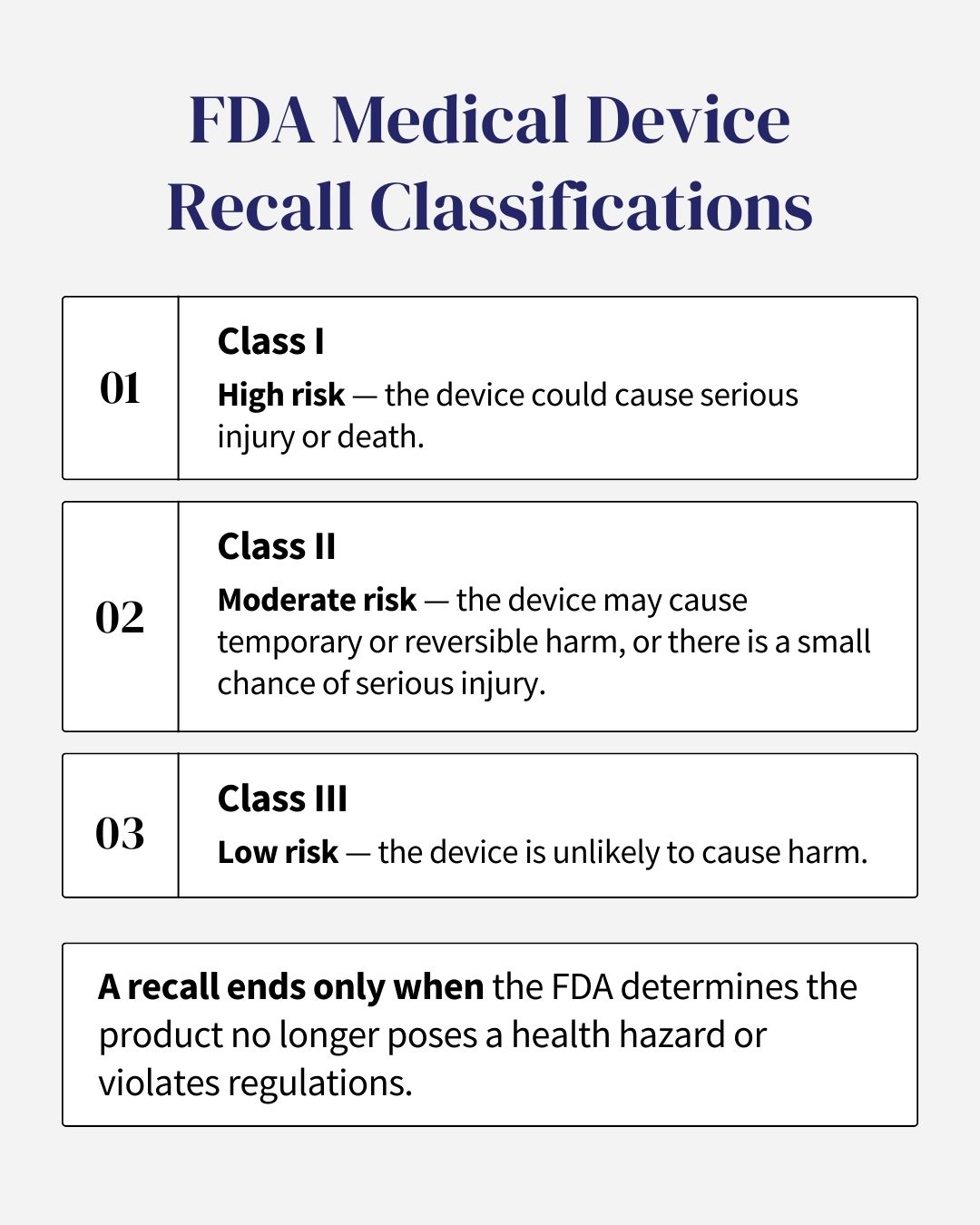 What Are the Reasons Behind a Medical Device Recall?
Recalls are triggered by defects that fall into one of three main categories:
The FDA receives over two million medical device reports of suspected deaths, serious injuries, and malfunctions each year. The fact that a recall happened is often powerful evidence of a defect, though it does not automatically guarantee a successful lawsuit.
If you are a patient in Dallas and receive a notice that your implanted or used medical device has been recalled, you need to act immediately, but with caution:
In 2024, medical device recalls hit a four-year peak, with 1,059 incidents reported, according to Sedgwick’s 2025 U.S. State of the Nation Recall Index.
Several different companies may have played a part in putting a dangerous device in your hands, and our job is to find out exactly who.
The potentially responsible parties our Dallas defective medical device lawyers will investigate include:
A doctor is usually not the main focus of a defective device case. But if a surgeon used the wrong size device, placed it incorrectly, or failed to warn you about risks they knew about, they may share responsibility. Most of the time, though, these cases come back to the company that designed or made the device.
Figuring out who’s truly at fault isn’t always simple, and you shouldn’t have to guess. If you’re dealing with a device that failed you, our team can sort through the details and explain your options in plain language. Call (214) 761-6623 or reach out through our online contact form to get answers you can trust.
Many people go into surgery hoping for relief, only to end up facing revision surgery, more pain, and the crushing feeling of taking steps backward instead of forward.
If a defective medical device has turned your recovery into a painful uphill battle, you have the right to seek compensation for every way this has changed your life.
A Dallas defective medical device lawyer at Freese & Goss will work to pursue the full value of your losses, which may include:
At Freese & Goss, we never lose sight of our real priorities: protect you, fight for you, and make sure powerful companies don’t get away with hurting the people they promised to help.
Of course, we’re proud of our results, but what matters most is what those results mean for real people who were struggling, scared, and unsure of what to do next.
We’ve taken on national manufacturers in some of the toughest defective device cases, and we’ve delivered life-changing outcomes for clients. For example:
With over 77 years of combined experience, Freese & Goss lead a team that focuses solely on serious injury and defective device cases. We don’t dabble. This is our work and our passion.
Don’t wait and risk losing your rights. Call (214) 761-6623 for a free, confidential consultation, or reach out through our online contact form. We’re here to be your steady, experienced team when everything else feels uncertain.
Yes, there is a very strict deadline called the statute of limitations. In Texas, you generally have two years to file a product liability lawsuit from the date of your injury or from the date you discovered (or reasonably should have discovered) that the defective medical device caused your injury. Because these deadlines are strict and missing them means you lose your right to compensation forever, you should get in contact with an attorney sooner rather than later.
If your loved one passed away because of a defective medical device in Dallas, you may be able to bring a wrongful death claim. These cases can help families recover compensation for funeral costs, the loss of financial support, and the loss of love, guidance, and companionship. While no lawsuit can undo the tragedy you’ve experienced, it can provide stability and hold the manufacturer accountable for the harm their device caused. A Dallas defective medical device lawyer can review your situation and explain your options.
There’s no simple answer, because every case is different. The potential value of a defective medical device claim depends on several factors, including the severity of your injuries, the medical treatments required (like revision surgeries or ongoing care), lost income, and the emotional impact on your life. Courts may also consider the strength of the evidence, the type of device involved, and whether multiple parties could be held responsible. A lawyer from our firm can review your situation, help you understand the factors that could affect your case, and guide you through your options.
Complications that may support a defective medical device claim can include infections at the surgical site, implant loosening or instability, fractures of the device or surrounding bone, dislocations, nerve damage causing weakness or numbness, allergic reactions to the materials, limited range of motion or mobility issues, migration or shrinking of the device, adhesion formation where scar tissue causes pain or internal problems, and bowel obstruction or perforation in cases involving internal devices.
Testimonials
When you entrust your claim to Freese & Goss, you gain a partner fiercely dedicated to protecting your rights. Our record of courtroom success shows we go all in for our clients, building strong strategies that push for real results and fair compensation.


Blog Posts
Contact Us
Whether you have questions or need an advocate in your corner, we’re ready to help. Contact us today for a free, no-pressure consultation